Monday, March 4, 2019

REGIONAL FESTIVALS

india,festival,important festivals of india,indian festival,classical and folk dances of india,hindu festival,festival of india round,major festivals of india,festivals of india 2018,trick to learn important festival of india,important festival of india shortcut trick,imp festivals of india shortcut trick,festivals,india celebrating festival of harvest,pongal festival,festival,india celebrating festival of harvest,northeast festival,festival (type of conference),state,pongal festival,traditional festivals,onam festival,unusual festivals,hemis festival,indian tribal festivals,art festival,festival celebrations,festivals,states of india (location),best festivals,north east festival,4th street festival,kites festival,music festival,unique festival,pushkar camel festival,sankranti festival,festivals of india,india,festivals in india,indian festivals,festivals,festival,all festivals of india,festivals of india dance,festivals of india for kids,national festivals of india,religious festivals of india,different festivals of india,most celebrated festivals of india,holi festival,festival of india round,celebrated festivals of india,different types of festivals,holi festival of colors india,rath yatra,jagannath rath yatra,yatra,ratha,rath yatra 2018,rath yatra festival,jagannath puri rath yatra,jagannath rath yatra 2018,ratha yatra,rath,ratha yatra usa,mantra,rath yatra katha in hindi,ratha yatra 2019,ratha yatra 2018,new york ratha yatra,rath yatra us,usa rath yatra,bsp rath yatra,puri rath yatra,rath yatra puri,rath yatra live,rath jatra,new york ratha yatra 2019,snake,festival,dj snake,snake festival,dj snake live,ultra music festival,snakes,snake prank music festival,amsterdam music festival,dj snake live 2018,dj snake drops only,dj snake ultra,snake charmer,dj snake on stage,dj snake 2018,dj snake ultra 2018,dj snake ultra miami,edm festival,indian festival,vietnam festival,cobra festival,music festival,japanese festival,main stage,psychedelic festival,chavithi festival,bihu,bihu festival,magh bihu,festival,bhogali bihu,bohag bihu,rongali bihu,bihu festival 2019,bihu festival 2017,magh bihu festival,bihu festival food,bihu festival 2018,about bihu festival,bihu festival drawing,bhogali bihu festival,is bihu a harvest festival,rongali bihu festival of assam,why do we celebrate bihu festival,name of different bihu festivals,papon sings bihu at north east festival


REGIONAL FESTIVALS

v Hariyana: Bhai Duj, Suraj Kund Craft Mela, Baisakhi
v Assam: Goru, Parasuram Mela, Akshatami Mela, Bihu, Tabal Chomli
v Punjab: Lohri, Kikka, Gidda(dance), Karva Chauth, Baisakhi
v Gujrat: Ramlila, Navaratri, Madhabrai, Tarnetar Fair, International Kite Festival (Ahmedabad), Bhavnath Festival, International Yoga Festival

v Arunachal Pradesh: Vasa-Vasa, Loku, Katrena, Chivera, Solungaram
v Rajasthan: Puskar Fair, Brahma Utsav, Teej, Gangaur Festival, Cattle Fair

v Tripura: Garia Puja, Tripureswari Temple Festival, Karchi Puja
v Uttar Pradesh: Dashera, Ram Nabami, BanYatra
v Uttarakhand: Shravan Utsab
v Odisha: Car Festival, Kumar Purnima
v Delhi: Hazarat Nazimuddin Christian Mela
v Goa: St. Xevier’s Festival, Carnival Festival, Gokul Astomi
v Himachal Pradesh: Minjor Mela, Jwalamukhi Mela
v Jammu & Kashmir: Kitchi Mela, Amabasya, Hemis Gumpha Mela
v Bihar: Sharul, Teej, Chautha, Karma Utsav, Chat, Animal Fair
v Jharkhand: Sharul, Teej, Chautha, Karma Utsav
v West Bengal: Ban Biwbi Puja, Kalpataru Utsav
v Kerala: Onaam, Snake Boat Festival, Poonam, Sabrimala
v Maharastra: Ganapati Festival, Sivaji Festival, Naoraj, Gudi Padwa
v Sikkim: Chaita Dasai
v Mizoram: Kut
v Chattishgarh: Pola
v Manipur: Rashlila
v Karnataka: Feast of Sent Phenomena, Makor Sankranti, Ugadi, Karga
v Tamilnadu: Pongal, Thaigraj Utsav, Brahma Shavam, Ekadosi, Karthika, Baikuntha, Floating Festival

v Andhra Pradesh: Pongal, Thaigraj Utsav, Brahma Shavam, Ekadoshi, Karthika, Boikuntha


Saturday, February 23, 2019

PREAMBLE


indian constitution,constitution of india,constitution,indian polity,parts of indian constitution,indian constitution articles,indian polity in hindi,indian history,indian polity by laxmikant,indian,the indian constitution,indian constitution quiz,indian constitution essay,indian constitution in tamil,indian constitution sources,essay on indian constitution,indian constitution psc video,sources of indian constitution,constituent assembly,constituent assembly of india,constituent assembly in hindi,constituent assembly of india (governmental body),costituent assembly,constituent assembly 1946,constituent assembly of nepa,constituent assembly for upsc,demand of constituent assembly,demand for constituent assembly,constituent assembly for ssc cgl,constituent assembly in english,efforts for constituent assembly,drafting committee,indian constitution,constitution of india,constitution,drafting comettee,making of indian constitution,drafting committee members,constitution drafting committee of india,constitutional drafting committee of india,drafting of the indian constitution,drafting committee of constitution,indian constitution’s drafting committee,constitutional assembly,drafting committee of indian constitution,constitution,indian constitution,articles of indian constitution,indian constitution articles,articles of constitution,articles,articles of constitution of india,constitution of india,united states constitution,article 13,articles of constitution quizlet,articles constitution,article 1 of the constitution,articles of constitution summary,constitution of india (constitution),article 1 of indian constitution,indian constitution,questions on indian constitution,indian constitution in hindi questions and answers,gk on indian constitution,indian constitution gk,indian polity questions and answers,quiz on indian constitution,constitution,indian constitution gk questions,constitution questions and answers,indian constitution questions and answers,indian constitution articles,constitution of india questions and answers,preamble,preamble of indian constitution,preamble in hindi,preamble of india,preamble to the constitution,preamble meaning,the preamble,preamble of constitution of india,preamble to the constituion of india,premble,preamble of inida,india's preamble,preamble by unacademy,remember the preamble,indian polity preamble,preamble by lakshmikant,trick to memorize preamble,indian constitution preamble,preamble of indian constitution,indian constitution,preamble of constitution of india,constitution of india,preamble of india,preamble,preamble to the constitution,the constitution of india,indian polity,constitution,preamble to the constituion of india,indian constitution preamble,preamble in hindi,preamble of the indian constitution,the preamble of indian constitution,about indian constitution


PREAMBLE
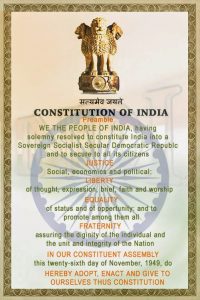
WE, THE PEOPLE OF INDIA, having solemnly resolved to constitute India into a SOVEREIGN SOCIALIST SECULAR DEMOCRATIC REPUBLIC AND TO SECURE TO ALL ITS CITIZENS:
JUSTICE, social, economic and political;
LIBERTY of thought, expression, belief, faith and worship;
EQUALITY of status and of opportunity;
and to promote among them all ---
FRATERNITY assuring the dignity of the individual and the unity and integrity of the Nation;
IN OUR CONSTITUENT ASSEMBLY THIS TWENTY SIXTH day of November 1949, do HEREBY ADOPT, ENACT AND GIVE TO OURSELVES THIS CONSTITUTION.

·         Concept has been taken from USA.
·         Language has been taken from France.
·         The Preamble is a preface or an introductory part of the Indian Constitution or a key to understand the constitution.
·         The basic structure of the constitution has been stated under the Preamble.
·         Indian Preamble is based on J.L. Nehru’s “Objective Resolution.”
·         It was moved by Mr. Nehru on 13th December.
·         It was adopted by the assembly on 22nd January 1947.
·         Preamble is non-judiciable.
·         Indian Preamble has been amended only once by 42nd Amendment Act, 1976.
·         By the 42nd Amendment Act three words have been added to the preamble, by the recommendation of Saran Singh Committee: Socialist, Secular and Integrity
·         The source of authority of Indian Constitution is people of India.
·         According to the preamble the nature of Indian at the commandment of the constitution of Sovereign, Democratic & Republic
·         Indian Constitution has a preamble – it indicates that it is written.
·         Sovereign: It refers to the absolute power of the Government of the Country.
o   Sovereign is two types: Internal and External
i)           Internal Sovereignty: It means the law of the states ultimate and absolute within the territory of the state and all the citizens have to obey the law.
ii)         External Sovereignty: It means India is independent and is not controlled by other countries and nations.
·         Socialist: It is added by 42nd amendment Act, 1976. It refers to a system where all means of production and distribution shall be controlled by the state. But the Indian brand of socialism is “Democratic Socialism” where the public and private sector co-exist side by side that is mix-economy. The main purposed of democratic socialism is to reduce inequality between the rich and the poor.
·         Secular: It is added by 42nd Amendment Act, 1976. It refers to equal respect and equal protection of all religions by the Government.
o   The state has no specific religion
o   The state shall be neutral or impercial towards all religions.
·         Democratic: It refers to a system of administration where the people can participle in the Government activities. It signifies that the Government of India must be ran by the elected representative of the people on the basis of universal adult franchises.
·         Republic: It refers to a system of administration where the head of the country will be elected.
o   It signifies that India has an elected head (President) which elected indirectly for a period of 5 years (Republic is the opposite of Monarchy).
·         Justice: It is three types – Social, Economic and Political
o   Social Justice refers to the equal treatment of all citizens without any social distinction on the basis of cast, colour, race, religion or sex.
o   Economic Justice refers to the elimination of inequality in wealth, income and property.
o   Political Justice refers that all the citizens should share equal political rights (the ideal of justice has been taken from Russian Revolution, 1917)
·         Liberty:  It means the absent of the restraints on the activities of the individual and at the same time providing opportunities for the development of individual.
·         Equality: It means the absence special privileges to section of sociality.
·         Fraternity: It means the sense of brotherhood. It assure the dignity of the individuals and unity and integrity of the nation. (The ideals of liberty, equality and fraternity have been taken from French Revolution, 1789)

Ø    Comments:
           ü  “The Preamble is the horoscope of our sovereign democratic republic.” – K.N. Munshi
           ü  “Preamble is the keynote of the Indian Constitution.” – Sir Earnest Barker
           ü  “Preamble is the soul of Constitution.” – Thakur Das Bhargab
           ü  “Preamble is the paradise of lawyers” – M.V. Pellai


___________________________

Monday, February 18, 2019

Some Important Questions & Answers on Indian Constitution

indian constitution,constitution of india,constitution,indian polity,parts of indian constitution,indian constitution articles,indian polity in hindi,indian history,indian polity by laxmikant,indian,the indian constitution,indian constitution quiz,indian constitution essay,indian constitution in tamil,indian constitution sources,essay on indian constitution,indian constitution psc video,sources of indian constitution,constituent assembly,constituent assembly of india,constituent assembly in hindi,constituent assembly of india (governmental body),costituent assembly,constituent assembly 1946,constituent assembly of nepa,constituent assembly for upsc,demand of constituent assembly,demand for constituent assembly,constituent assembly for ssc cgl,constituent assembly in english,efforts for constituent assembly,drafting committee,indian constitution,constitution of india,constitution,drafting comettee,making of indian constitution,drafting committee members,constitution drafting committee of india,constitutional drafting committee of india,drafting of the indian constitution,drafting committee of constitution,indian constitution’s drafting committee,constitutional assembly,drafting committee of indian constitution,constitution,indian constitution,articles of indian constitution,indian constitution articles,articles of constitution,articles,articles of constitution of india,constitution of india,united states constitution,article 13,articles of constitution quizlet,articles constitution,article 1 of the constitution,articles of constitution summary,constitution of india (constitution),article 1 of indian constitution,indian constitution,questions on indian constitution,indian constitution in hindi questions and answers,gk on indian constitution,indian constitution gk,indian polity questions and answers,quiz on indian constitution,constitution,indian constitution gk questions,constitution questions and answers,indian constitution questions and answers,indian constitution articles,constitution of india questions and answers

1.     When was the Indian Regulation Act came into existence?
Ans. 1773
2.     When was the Pitts India Act introduced?
Ans. 1784
3.     The separation of judiciary from administration was introduced for the 1st time by which Act?
Ans. Indian Regulation Act
4.     The post of the Governor General was established through which Act?
Ans. Govt. of India Act, 1858
5.     The East India Company was abolished by which Act?
Ans. Govt. of India Act, 1858
6.     Which types of powers introduced by Govt. of India Act, 1935
Ans. Reserved and Transferred
7.     The Peel Committee was set up in which year?
Ans. 1916
8.     Diarchy was introduced in the provinces in which year?
Ans. 1919
9.     In which year was formation of regional party come into existence?
Ans. 1921
10.  When was the 1st meeting of Constituent Assembly held in Delhi?
Ans. 9th December, 1946
11.  Who was the ‘temporary’ or ‘inaugurate’ president of Constituent Assembly?
Ans. Sachidananda Sinha
12. When was Rajendra Prasad elected as permanent president of Constituent Assembly?
Ans. 11th December, 1946
13. How many members were there in Constituent Assembly?
Ans. 389
14.  How many members were there in Constituent Assembly from Princely States?
Ans. 93
15.  How many members were there in Constituent Assembly from Commissioner’s Provinces?
Ans. 4
16.  By how many committees were The Constituent Assembly worked through?
Ans. 22 Committees
17. Who was the Constitutional Advisor of Constituent Assembly?
Ans. Sri Benegal Narsing Rao
18. Who introduced the Objective Resolution of Preamble?
Ans. Pandit Jawhar Lal Nehru
19.  J.L. Nehru introduced Objective Resolution in which year?
Ans. 13th December, 1946
20.  When was the Objective Resolution adopted by Constituent Assembly?
Ans. 22nd January, 1947
21.  When was the Drafting Committee set up?
Ans. 29th August, 1947
22.  Who was the Chairman of Drafting Committee?
Ans. Dr. Bhimrao Ramji Ambedkar
23.  Who was the only Muslim Member of Drafting Committee?
Ans. Sir Syed Muhammed Saadulla

indian constitution,constitution of india,constitution,indian polity,parts of indian constitution,indian constitution articles,indian polity in hindi,indian history,indian polity by laxmikant,indian,the indian constitution,indian constitution quiz,indian constitution essay,indian constitution in tamil,indian constitution sources,essay on indian constitution,indian constitution psc video,sources of indian constitution,constituent assembly,constituent assembly of india,constituent assembly in hindi,constituent assembly of india (governmental body),costituent assembly,constituent assembly 1946,constituent assembly of nepa,constituent assembly for upsc,demand of constituent assembly,demand for constituent assembly,constituent assembly for ssc cgl,constituent assembly in english,efforts for constituent assembly,drafting committee,indian constitution,constitution of india,constitution,drafting comettee,making of indian constitution,drafting committee members,constitution drafting committee of india,constitutional drafting committee of india,drafting of the indian constitution,drafting committee of constitution,indian constitution’s drafting committee,constitutional assembly,drafting committee of indian constitution,constitution,indian constitution,articles of indian constitution,indian constitution articles,articles of constitution,articles,articles of constitution of india,constitution of india,united states constitution,article 13,articles of constitution quizlet,articles constitution,article 1 of the constitution,articles of constitution summary,constitution of india (constitution),article 1 of indian constitution,indian constitution,questions on indian constitution,indian constitution in hindi questions and answers,gk on indian constitution,indian constitution gk,indian polity questions and answers,quiz on indian constitution,constitution,indian constitution gk questions,constitution questions and answers,indian constitution questions and answers,indian constitution articles,constitution of india questions and answers
24. How many members were there in Drafting Committee?
Ans. 7
25.  When did the Drafting Committee start to prepare Constitution?
Ans. 4th November, 1947
26.  When did the Drafting Committee finish the draft of Constitution?
Ans. 21st February, 1948
27.  Indian Constituent was actually ready/adopted in which year?
Ans. 26th November, 1949
28.  Indian Constituent was come into force in India in which year?
Ans. 26th January, 1950
29. What is the chief recommendation of Peel Committee?
Ans. To set up a federal structure
30.   India got her independence through which act?
Ans. Indian Independence Act
31.  Mount Batten Plan is known as:
Ans. June 3rd Plan
32. How many articles were there in our Constitution?
Ans. 395
33. How many articles are there in our Constitution?
Ans. 448
34.  How many schedules were there in our Constitution?
Ans. 8
35. How many schedules are there in our Constitution?
Ans. 12
36. How many parts were there in our Constitution?
Ans. 22
37.  How many parts are there in our Constitution?
Ans. 24
38.  How long time was it taken to prepare the Constitution?
Ans. 2 years 11 months and 17 days
39.  What was the expenditure amount to prepare the Constitution?
Ans. Nearly 64 Lakhs
40.  When did Cabinet Mission come to India?
Ans. 1946
41. How many members were there in Cabinet Mission?
Ans. 3
42.Who were the members of Cabinet Mission?
           Ans. Sir Stafford Cripps, A.V. Alexander and Pathik Lawrence
43.Who was the Chairman of Cabinet Mission?
           Ans. Sir Pathik Lawrence
44.Through which Plan did India get her freedom (independence)?
           Ans. Mountbatten Plan
45.Morley-Minto Reforms Act was come into existence in which year?
           Ans. 1909
46.In which year did the Montague Chelmsford Report come into existence?
           Ans. 1919